

Distress tolerance
Is it a critical parenting skill?
Originally published in the Moultrie News.
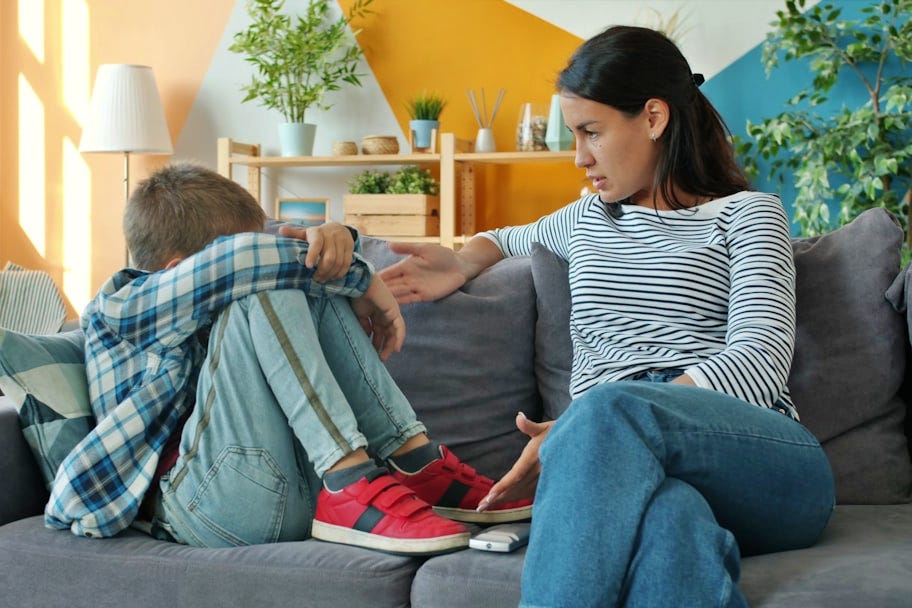
I read an article that said “distress tolerance” is the most important skill for parents. Do you agree?
One of the most crucial parenting skills, argues Claire Lerner in Psychology Today, isn’t calming your child. It’s calming yourself. Lerner calls this “distress tolerance”: the ability to stay composed while your child is upset instead of rushing to eliminate their discomfort.
Children need to experience manageable discomfort. Feeling anxious, frustrated, disappointed, or scared is a normal part of life. Working through those emotions helps build resilience, confidence, flexibility, and healthy coping skills.
Parents often make things worse because their child’s distress is hard to tolerate. When children cry, panic, cling, or protest, parents may make decisions that prevent their child from working through their emotions. These include giving in to the child’s demands, removing challenges, or bribing.
Such responses may end the immediate distress, but they also reinforce the child’s belief that they can’t handle difficult situations. That only hardens and extends the underlying problem
Some examples: Fear from sleeping in their own room the first time. Frustration in struggling with homework or losing a game. Disappointment in being told “no” or getting a low grade. Anger in stopping a video game, getting a consequence for misbehavior, or having to do a chore. Discomfort in speaking before a group, introducing themselves, or ordering at a restaurant.
Each of these can be an emotional experience. But they each have their adult equivalents, so parents must help the child overcome their emotions while the child is still developing and the stakes are relatively lower.
That requires “distress tolerance.” Without it, parents resort to decisions that may relieve the negative emotion but delay the acquisition of coping skills.
The two I see most often are fixing and indulging. Indulging a child’s emotions might look like taking back a consequence you just issued, telling them they don’t need to finish the homework or the chore, or letting them go on sleeping with you. This conditions the child to believe that their emotions are needs to be fulfilled, not impulses to be managed.
Fixing might be worse. It rigs the rules in favor of your child, which grooms them for a world that doesn’t really exist. It makes the world conform to your child rather than teaching your child to adapt to the world. It might mean getting an unnecessary 504 to reduce the amount of homework or petitioning the teacher to raise a grade or remove a punishment.
Lerner says the better approach is calm support without rescuing, rigging, or indulging. Parents should acknowledge the child’s feelings (”I know this is hard”), remain emotionally steady, and allow the child to work through the experience.
That means stating the reality clearly and confidently: “Screen time is over.” “It’s bedtime.” “Finish that chore before going out.” If the child cries, yells, or argues, parents can acknowledge the discomfort without removing the limit or rescuing the child from the emotion.
One way to help develop distress tolerance is to view emotional situations as opportunities, not afflictions. Instead of focusing on the child’s distress, focus on the long-term value of overcoming an obstacle. Though their tears and shouts might make it feel like they’re falling off a ladder, think of it instead as climbing a rung. With each rung under their belt, the next becomes easier.
“When you learn to tolerate your child’s distress,” Lerner says, “your child learns to tolerate distress,” and that’s when growth occurs. “To help our kids do hard things—to muscle through difficult moments and life’s challenges—they need us to do this hard thing: Manage our own emotions and free them to work through theirs.”
Once deciding that the distressing situation is here to stay, parental instincts naturally change from giving in to giving help, usually through a combination of encouragement and pressure.
Do I think “distress tolerance” is the most important parental skill? It’s certainly one of them. Every school year I see its remarkable value in making the strongest students enjoy success that will undoubtedly carry them farther in life than their habitually rescued counterparts.

Jody Stallings has been an award-winning teacher in Charleston since 1992 and is director of the Charleston Teacher Alliance. To submit a question, order his books, or follow him on social media, please visit JodyStallings.com.